As the Buyside looks to the adoption of AI to help achieve optimal portfolio balance and performance there is a key hurdle to overcome, the dreaded primary allocations.
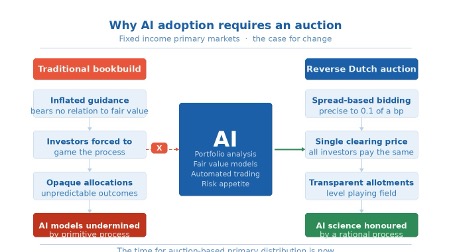
AI is undoubtedly being adopted by the Buyside to analyse portfolios as well as determine fair value for both the secondary and primary markets. Automated trading in secondary is a relatively easy goal, but what happens when the science of AI runs headlong into the wall of subjectivity and order inflation of a primary book? Initial marketing levels for new issuance bear no reality to the implied fair value communicated from the Underwriters, nor indeed to the models and tools the buyside have at their disposal.
So why does this iterative process remain the norm? It’s our belief that order book inflation is seen as encouraging otherwise reluctant investors into a deal, but does this not come at the detriment of those investors who have done their homework? Given the proliferation of data and AI in this space it can be argued that this antiquated method of goading investors into a book should be consigned to the dustbin of history and that the time for auctions is now.
An auction allows investors to express appetite for a deal in a far more detailed manner. They can layer in multiple bids with differing pricing points, down to 1/10 of a basis point on spread, or three decimal places for cash and yield (a level of precision the current process doesn’t allow). Minimum and / or maximum deal sizes can also be applied to bids. A reverse Dutch auction mechanism applies, resulting in a single clearing price paid by all investors in the book. This is determined by last bid required to complete a given deal size.
The initial response from the buyside to this is usually, ‘but I’m a Tier 1 account and usually get taken better care of than others’
However, in an auction you will only ever be allotted bonds at a level that makes economic sense to you — and you will always know exactly why. In a traditional bookbuild, outcomes are opaque: allocations can be sparse with no explanation, or worse, you receive more paper than anticipated and are left wondering what that signals about broader demand. The science being applied to determine an investors risk appetite should not be undone by the primitive allocation process.
If you are deploying AI to sharpen your investment decisions, you should also be demanding an auction platform for primary distribution. Anything less is undermining your own toolkit.
Contact us at enquiries@bondauction.com to find out more